A gemstone is a very different subject from a ring. It is transparent, it bends and splits light, and its value depends on details such as clarity, symmetry and colour. A photograph has to show all three without inventing any of them.
Loose stones and set stones are different problems
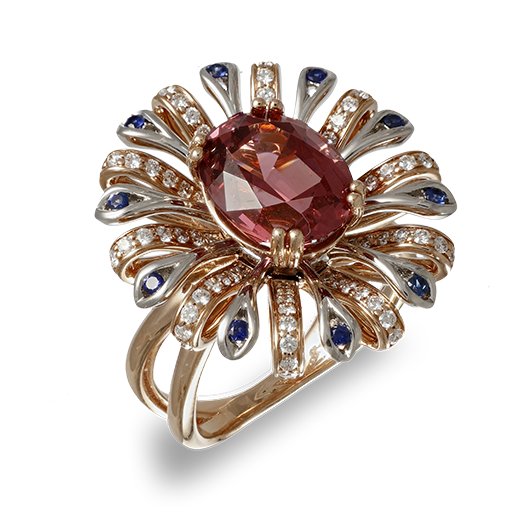
Loose stones can be placed table-up and photographed from directly above, which makes it possible to show symmetry and the pattern of reflections. Set stones are partly hidden by prongs and bezels, and you have to photograph the piece as a whole while keeping the stone alive.
Light for sparkle, not just for brightness
Diamonds and coloured stones come to life when light enters, bounces inside and returns to the viewer. Back light and side light create that effect; flat frontal light tends to make stones look dull. Many gem photographers combine a bright background to show transparency and darker surroundings to show fire and contrast.
Show colour honestly
Colour is both the main selling point and the easiest thing to distort. Use a neutral reference at the start of each session, keep the white balance constant, and avoid heavy saturation in post-production. A customer who receives a stone paler than the photograph will return it.
Keep stones clean and positioned
- Clean the stone before every shot: fingerprints change how light behaves
- Use holders that secure the stone without forcing its natural orientation
- Photograph the same shapes with the same orientation and distance so a range looks coherent
Capture detail you can inspect
Close-ups of facets, inclusions and symmetry are valuable for trade customers. Use a macro lens or a specialised system, shoot at high resolution and check detail at full size.
A specialised approach
For loose diamonds and gemstones, ALO D-Imaging is built for exactly this task: positioning the stone, controlling reflections, background and illumination, capturing detail and then inspecting the result for symmetry, colour behaviour, clarity and characteristic optical patterns. The same set-up produces high-resolution photographs, close-ups and rotational content.
Discover ALO D-Imaging or the gemstone photography equipment page.
How to Photograph Diamonds and Gemstones: Lighting, Angles and Colour